

Title: A Short History of the Langstroth Beehive
Introduction:
Beekeeping has a rich history, with various hive designs developed over the centuries to facilitate the management and well-being of honeybee colonies. Among the many hive designs, the Langstroth beehive stands out as one of the most influential and widely used systems in modern beekeeping. In this blog post, we will delve into the fascinating history of the Langstroth beehive, tracing its origins, its inventor, and the impact it has had on beekeeping practices worldwide.
Origins of the Langstroth Beehive:
The Langstroth beehive was named after its inventor, Reverend Lorenzo Lorraine Langstroth, an American apiarist and clergyman. In the mid-19th century, Langstroth observed the behavior of honeybees and discovered that they maintained specific spaces between the combs to allow for efficient movement within the hive. This observation led to his groundbreaking hive design, which incorporated removable frames, allowing beekeepers to manage the colony without damaging the comb.

Invention and Design:
In 1851, Langstroth patented his design for the movable frame hive. The key innovation of the Langstroth hive was the introduction of a standardized frame size with fixed spacing, known as “bee space.” This narrow gap of approximately 3/8 inch (9.5 mm) between the frames allowed bees to move freely without bonding the combs together with propolis, a sticky substance produced by bees.
Langstroth’s hive design consisted of rectangular boxes stacked vertically, with the frames placed inside. The frames could be easily removed for inspection and honey extraction, making beekeeping more manageable and less disruptive to the colony. The Langstroth hive design also included a removable cover and a bottom board to provide ventilation and control pests.
Impact on Beekeeping:
The introduction of the Langstroth beehive revolutionized beekeeping practices worldwide. Prior to Langstroth’s invention, beekeepers faced numerous challenges when managing hives. They often resorted to destructive methods to extract honey, such as cutting through combs, which resulted in stressed and agitated bees.
The Langstroth hive’s removable frames allowed beekeepers to inspect the colony, monitor its health, and perform various management practices with minimal disturbance. This development significantly improved honey production, colony health, and the overall sustainability of beekeeping operations.
Moreover, Langstroth’s hive design facilitated the scientific study of honeybees. Researchers could easily access the combs for observation and experimentation, leading to advancements in understanding bee behavior, genetics, and honeybee diseases.
The Langstroth beehive quickly gained popularity within the beekeeping community and remains the preferred hive design for both hobbyist and commercial beekeepers to this day. Its standardized dimensions have also facilitated the development of modern beekeeping equipment, such as extractors and other hive accessories.
Conclusion:
The Langstroth beehive has undoubtedly left a lasting impact on the world of beekeeping. Reverend Langstroth’s invention revolutionized hive management, making it more efficient, sustainable, and conducive to scientific research. The hive’s removable frames and standardized dimensions have become the gold standard for modern beekeeping practices, ensuring the well-being of honeybee colonies and maximizing honey production. As we continue to face challenges in beekeeping, the Langstroth beehive stands as a testament to human ingenuity and the quest for harmonious coexistence with the natural world.
Start Your Own Langstroth-Style Hive
Want to try Langstroth’s design for yourself? Our 8 or 10 Frame Beehive Starter Kit is wax-dipped, assembled, and ready to go. Prefer the horizontal version instead? See our guide to building a Long Langstroth hive.
Welcome to the exciting journey of building your very own Long Langstroth Beehive! Before we dive into the construction process, let’s take a moment to understand what makes the Long Langstroth beehive unique.
What is a Long Langstroth Beehive?
The Long Langstroth beehive is a horizontal variation of the traditional Langstroth hive, designed to provide a more natural and accessible environment for bees. Unlike the standard Langstroth hive, which stacks boxes vertically, the Long Langstroth hive organizes frames side by side. This innovative design offers several advantages:
- Horizontal Layout: The frames are arranged horizontally, allowing for easier access during hive inspections and honey harvesting. This design reduces the need for heavy lifting associated with traditional vertical hives.
- Natural Comb Building: The horizontal configuration closely mimics the way bees build comb in the wild. This provides a more natural environment for the bees, encouraging them to construct comb in a way that aligns with their instincts.
- Multiple Colonies in One Hive: The Long Langstroth hive is well-suited for beekeepers interested in maintaining multiple colonies within a single hive. This makes it an excellent choice for those looking to expand their apiary while maintaining efficient hive management.
Now that we have a better understanding of the Long Langstroth beehive, let’s embark on the journey of constructing your hive.
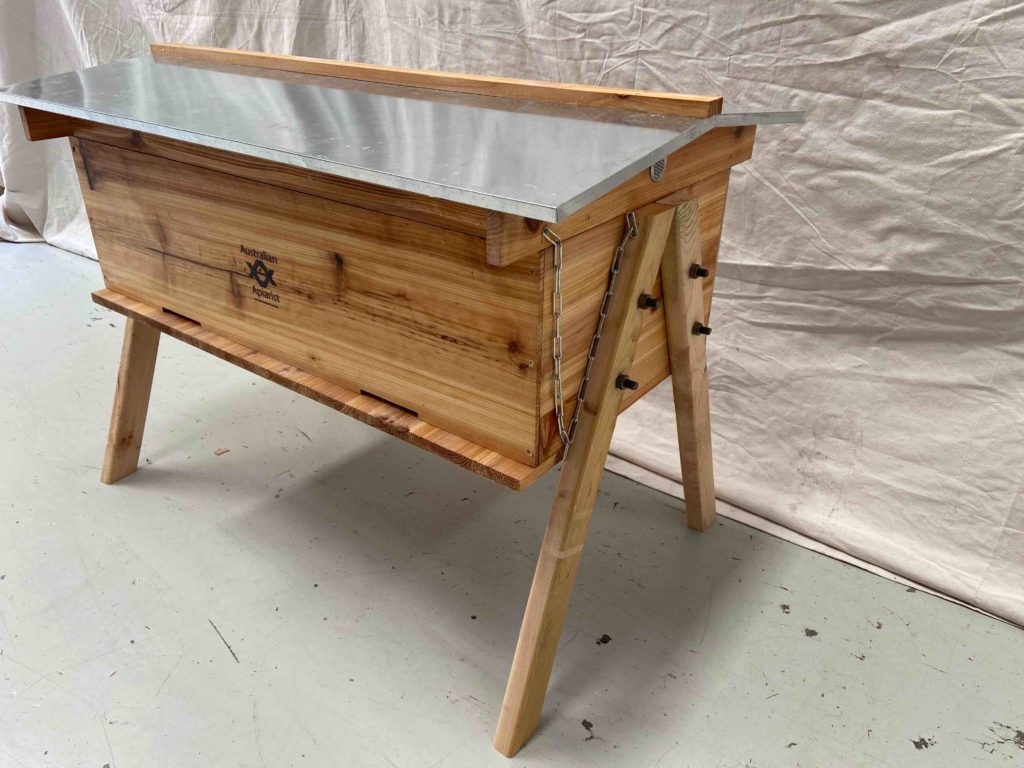
Step 1: Building the Lid
- Screw Together the Triangular Ends:
- Align the triangular ends with the long side and secure them together using screws.
- Attaching Timber to Roof Frame:
- Separate the tin from the timber boards.
- Screw or nail the timber to the roof frame, ensuring an 80mm overhang on all three sides.
- Place the tin back onto the timber panels.
- Securing Tin with Ridge Capping:
- Place the long ridge capping on top of the tin.
- Use longer screws to secure the ridge cap at the ends and a couple of shorter screws in the centre to hold the tin in place. (See Video Below)
Step 2: Building the Beehive
- Screwing the Sides Together:
- Assemble all four sides of the beehive by using three screws in each corner.
- Attaching Bottom Boards:
- Turn the beehive upside down.
- Place the bottom boards with the mesh facing inside the box and the cut-out panels facing up.
- Ensure an overhang on the sides of the bee entrances.
- Screw down the bottom boards, taking care not to obstruct the bee entrances.
Step 3: Assembling All Parts
- Adding Legs:
- Bolt on the legs, leaving them slightly loose initially.
- Tighten the legs once they are all attached and the hive is leveled.
- Attaching Knobs and Panel Latches:
- Add knobs and panel latches to the bottom of the beehive.
- Attaching Lid:
- Place the lid on top of the beehive.
- Attach hinges about 100mm in from each side, ensuring the screw length does not penetrate into the hive.
- Attaching Chain:
- Unscrew one screw from each side of the lid on the front face.
- Attach the chain to the lid, have a play to determine the best placement to the legs. Connect the other end of the chain to the hive leg.
- Final Touches:
- Double-check all screws and connections.
- Ensure the lid can be opened and closed smoothly.
Congratulations! You’ve successfully built your Long Langstroth Beehive. Now, you’re ready to welcome a thriving bee colony into their new home. Happy beekeeping! 🐝✨
No worries if you don’t have one—grab yours here and get started!